


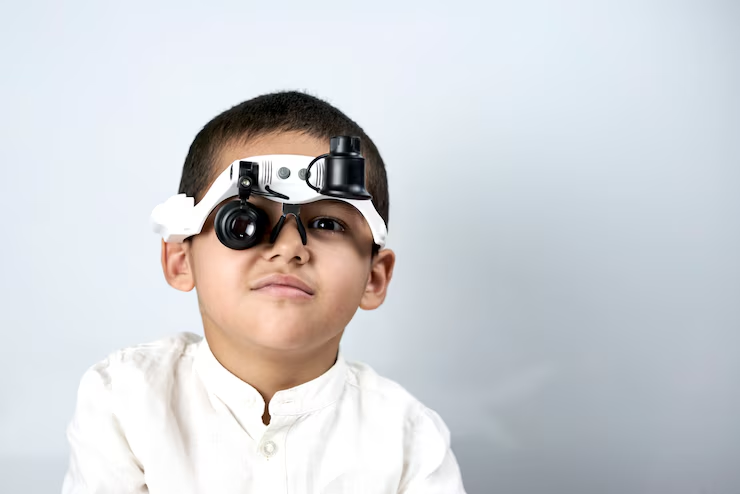
Amblyopia, commonly referred to as “lazy eye,” affects millions of people worldwide—mostly children. Despite its prevalence, this condition is surrounded by several myths and misconceptions that often delay treatment or lead to ineffective approaches. Vision therapy, a proven treatment for amblyopia, is also misunderstood. In this blog, we debunk the top 10 myths about amblyopia and vision therapy to help you separate fact from fiction.
1.Myth: Amblyopia is Just a Cosmetic Issue
Truth:
Amblyopia is not just about how the eye looks; it’s about how the brain and the eye work together. Even if the eye appears normal, the brain may be ignoring input from the weaker eye, leading to reduced vision that cannot be corrected with glasses alone.
2.Myth: Amblyopia Only Affects Children
Truth:
While amblyopia often begins in childhood, it can persist into adulthood if not treated early. The good news? Vision therapy can still be effective for adults, contrary to the outdated belief that treatment only works for kids.
3.Myth: Patching is the Only Solution
Truth:
Eye patching has long been a standard treatment, but it’s not the only option. Vision therapy offers a more comprehensive approach that retrains the brain to use both eyes together, often leading to better long-term results.
4.Myth: Vision Therapy is a Scam
Truth:
Vision therapy is backed by decades of clinical research and is recommended by developmental optometrists. It is a legitimate, science-based treatment that has helped many patients improve their visual skills.
5.Myth: Glasses Alone Can Cure Amblyopia
Truth:
While glasses may help with focusing, they do not retrain the brain to use the amblyopic eye. Vision therapy and sometimes patching are essential to correct the neural pathways involved.
6.Myth: It’s Too Late to Treat Amblyopia After Age 7
Truth:
Neuroplasticity—the brain’s ability to change—continues well into adulthood. Although earlier treatment is ideal, many adults have successfully improved their vision through vision therapy.
7.Myth: Amblyopia Is Caused by Lazy Behavior
Truth:
The term “lazy eye” can be misleading. Amblyopia is a neurological condition, not a behavioral issue. The brain is not processing visual signals from one eye properly—this has nothing to do with effort or laziness.
8.Myth: All Vision Therapies Are the Same
Truth:
Effective vision therapy is tailored to each patient’s specific needs and conducted under the supervision of a trained developmental optometrist. Beware of generic online programs that claim instant results without professional guidance.
9.Myth: Surgery Can Fix Amblyopia
Truth:
Surgery may help correct eye alignment in cases involving strabismus, but it doesn’t resolve amblyopia on its own. Post-surgical vision therapy is often required to restore proper visual function.
10.Myth: If One Eye Works Fine, You Don’t Need to Treat the Other
Truth:
Both eyes must work together for optimal depth perception and visual coordination. Leaving amblyopia untreated can result in poor depth perception, difficulty in reading, and other visual problems that affect daily life.